Trail Accessibility Hub

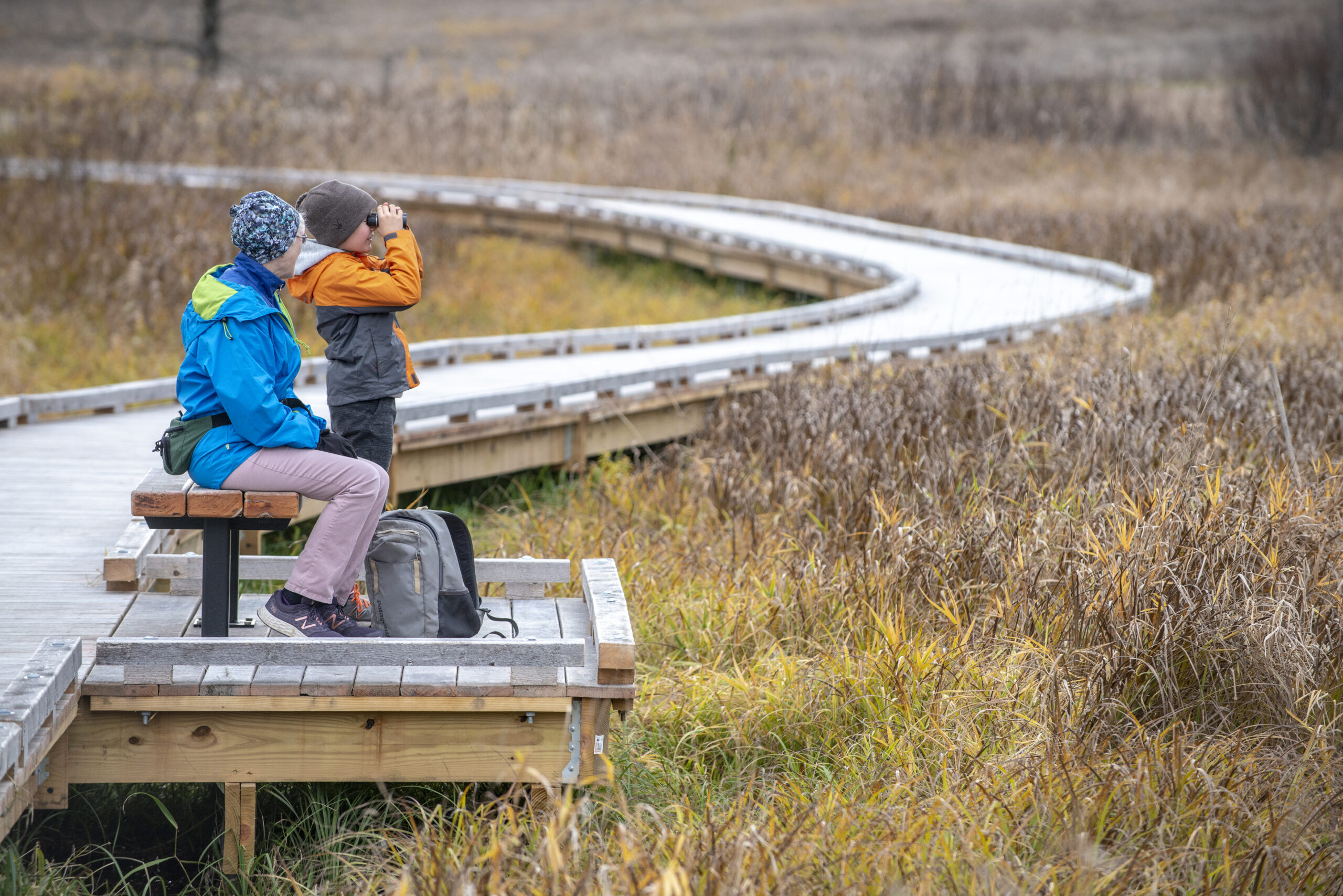
There are plenty of ways to design and maintain trails to make them more inviting to people with a wide range of physical abilities.
That’s why we are partnering with Vermont Adaptive Ski and Sports, Vermont Mountain Bike Association, Upper Valley Trails Alliance, Northern Forest Canoe Trail, Community Geographics (the organization that maintains Trail Finder), and local trail users to address the challenges people face when seeking to build or use accessible trails in Vermont.
We’re pleased to announce that we have been awarded a $644,000 grant from the Vermont Outdoor Recreation Economic Collaborative (VOREC) Community Grant Program (CGP) to improve public trail accessibility in Vermont. The project, co-led by our five partner organizations, takes place between June 1, 2024 and December 2025, concluding with a final set of recommendations to the the State of Vermont on how to continue the work.
WHO WE ARE
Understand what the Trail Accessibility Hub is and the trail organizations dedicated to increasing outdoor access for all.
What We Do
Developing resources, increasing professional capacity, and providing hands-on assessments to expand trail access for people of all abilities.
Getting Started
Explore the Trail Accessibility Hub and the trail accessibility guidelines for designing, building, and adapting existing trails for every body.
Trails for Everyone
Vermont is known for thousands of miles of trails through diverse and beautiful landscapes, but people with disabilities can’t access the same quantity or quality of recreation assets able-bodied people enjoy.
According to a 2021 CDC survey, nearly a quarter of Vermonters have a disability, including 10% with mobility-specific disabilities. Yet only 1% of the state’s 7,750+ miles of trails are listed as “accessible” by Trail Finder and less than 100 miles of more than 1,000 public mountain bike trail miles have been assessed for adaptive mountain bike (aMTB) use.
Fortunately, we can do something about it.
Building Access, One Trail at a Time
In this five-minute video, you’ll see how the Trail Accessibility Hub is connecting partners and trail users to create a more inclusive future for outdoor recreation in Vermont.
Trail Assessments
Apply professional and practical recommendations to improve and build ADA accessible trails for people of all mobilities. Apply for a trail assessment this field season.
Making Accessible Trails for All: Stories from the Field

Audio Story: Access to the Outdoors at Every Age
A conversation with John and Judy about aging, access, and the joy of being outside
John and Judy Blackmer love spending time outdoors. Both native Vermonters, they have walked, hiked, biked, run, paddled, and skied for decades. Now that they’re both in their 90s, it’s harder to do the activities they enjoy – but they don’t let that stop them from getting outside. In this story, Judy and John talk…
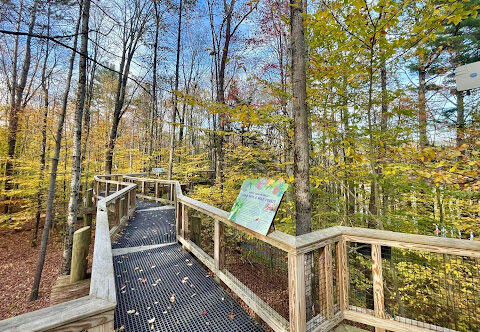
VINS: Edie’s Accessibility Review for Trail Finder
Getting Into—and Above—the Woods in a Wheelchair
Quechee, Vermont
Edie Perkins, a lifelong cyclist who lives in South Burlington, was paralyzed from the chest down in 2017 after a car hit her while she was biking. Now she uses a wheelchair or a hand-cycle on trails. Recently, she visited the Vermont Institute of Natural Science (VINS) in Quechee, a forested campus known for its…

Louie’s Landing, Missisquoi River: Water Accessibility
Recommended updates to an aquatic entry point
Swanton, Vermont
An accessibility assessment was completed in December 2024 by VT Adaptive, as part of the Accessibility Initiative. A series of site visits were conducted to to evaluate the accessibility of five water access locations along the Missisquoi River. The assessments aimed to identify existing barriers, note features supporting individuals with disabilities, and propose actionable recommendations…
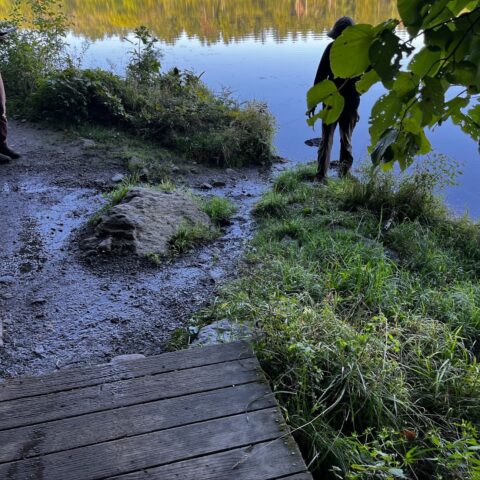
Indian Brook, Winooski Valley: Water Accessibility
Recommended updates to an aquatic entry point
Essex, Vermont
An accessibility assessment was completed in 2024 by The Northern Forest Canoe Trail (NFCT) and Vermont Adaptive, as part of a statewide accessibility initiative, and a series of site visits to assess the current accessibility of seven different water access locations in the Winooski Valley.
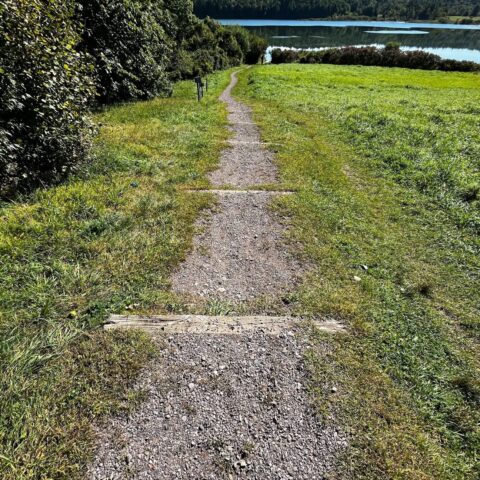
Colchester Pond, Winooski Valley: Water Accessibility
Recommended updates to an aquatic entry point
Colchester, Vermont
An accessibility assessment was completed in 2024 by The Northern Forest Canoe Trail (NFCT) and VT Adaptive, as part of the Accessibility Initiative, and a series of site visits to assess the current accessibility of seven different water access locations in the Winooski Valley.
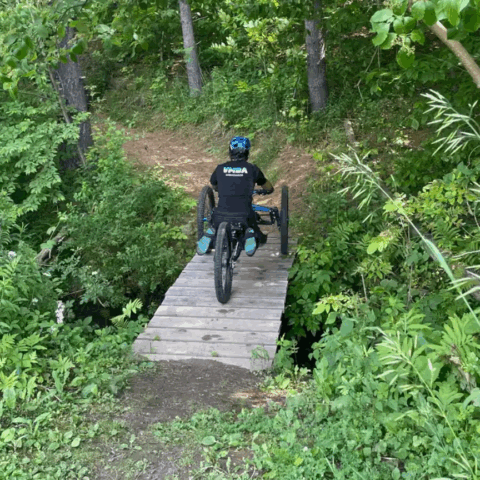
Ludlow Area Sports Trails: Adaptive-Friendly Mountain Biking Trails
~2 miles of adaptive-friendly mountain biking trails
Ludlow, Vermont
After a trail assessment, LAST trails were updated to be more accessible to adaptive mountain bike riders.
FAQs
A: The Trail Accessibility Hub is a partnership of trail organizations and disabilities advocates dedicated to improving accessibility on public trails and outdoor recreation areas in Vermont for people with disabilities. The Hub was created in 2024 by Vermont Trails & Greenways Council in partnership with the Upper Valley Trails Alliance, Vermont Mountain Bike Association, Vermont Adaptive Ski and Sports, Northern Forest Canoe Trail and Trail Finder. VTGS hosts web–based resources that educate trail managers and support trail users. Together, the partnership hosts networking opportunities that connect partners and trail users to accessible trail design and maintenance information, trail grants and funding sources; provide trail assessments and more. Initially funded by the Vermont Outdoor Recreation Economic Collaborative (VOREC) Community Grant Program, the TAH is now seeking funding to continue in ‘26 and beyond.
A: Our Trail Accessibility Hub includes a helpful guide to finding wheelchair friendly trails and other types of outdoor recreation that are accessible to all persons. In this guide, you’ll find recommendations for accessible trail apps—like Trailfinder, Google’s ADA Map, and All Trails—as well as blogs and articles about disability friendly trails, accessible activities, and accessible travel resources in Vermont.
A: Trail Finder’s Accessible Experience Search is the easiest way to discover family-friendly outdoor activities that work for a wide range of ages and abilities. You can filter for pedestrian trails, biking routes, paddling access, walking paths, and nature centers that include accessibility details—such as surface type, slope, amenities, rest areas, parking, and restrooms. Many of the listings also note features that make outings easier for families, like stroller-friendly surfaces, short loop options, shade, picnic areas, and nearby playgrounds or educational programs.
A: Mobility equipment and other adaptive sports equipment—like aquatic equipment, all-terrain wheelchairs, adaptive paddling gear, adaptive mountain bikes, and more—can be purchased, rented, or borrowed through several adaptive sports organizations and programs in Vermont. Some of these organizations offer grants to help users purchase mobility equipment. Visit our helpful guide to learn more about the organizations offering these services.
A: Here in Vermont, several companies and organizations specialize in building accessible and adaptive trails. These experts can help make mountain bike trails more usable by people on adaptive equipment, improve aquatic access trails, suggest easy improvements to make pedestrian trails usable by people who may have visual impairments, or use walkers or canes, and ensure your trail project meets ADA accessible trail guidelines and standards. The full list is available on our Professional Trail Builders page.
A: Yes, there are private and public funding sources that can be used to improve trail accessibility. Two popular funding sources in Vermont include the FPR Recreation Trails Program (RTP), and the VOREC Community Grant Program. There is also federal funding for trails and recreational paths. Vermont Trails & Greenways Council continuously monitors available grants and funding sources to support your accessible trail project or other accessible outdoor recreation project. Available trail grants and other resources can be found here.
A: The short answer is, no. The two nationally recognized guidelines for defining trail accessibility are Access Board Guidelines (National guidance applying ADA/ABA principles to outdoor spaces) and the U.S. Forest Service Trail Accessibility Guidelines (FSTAG). Many trails can be greatly improved without being fully compliant with these guidelines. Small, low-cost improvements can still have a big impact. For example, improved parking and trail information at the trailhead, benches and resting spots, and removing tripping hazards can help parents with young children and people who use mobility devices like canes and walkers enjoy trail-based activities. You can learn more about guidelines for building accessible and adaptive trails here.
A: A sensory trail is a trail designed for people living with autism or a neurodivergence. Trails designed with these users in mind typically include sensory-friendly spaces or “alone zones,” predictable and consistent pathways, a video preview of the trail, interactive stations with tactile, auditory, or visual elements, and wayfinding support. Any and all of these features help reduce anxiety and provide an accessible nature experience for neurodivergent trail users.
A: The gold standard for accessible trails include: a minimum 36-inch width with 5-foot passing areas every 1,000 feet (preferably 5 feet throughout), slopes following U.S. Forest Service guidelines that allow up to 5% unlimited distance, 5 to8.33% for up to 200 feet between rest areas, and steeper grades up to 12% for shorter segments with mandatory rest stops. Trails should use hardened multi-layer surfaces like compacted hardpack with crushed stone base, feature accessible parking within 2% slope near the trailhead, include frequent benches with wheelchair space, and provide clear signage with trail information, safety barriers at viewpoints, and accessible restrooms connected by firm pathways. For more detailed information about ideal standards for trail accessibility, click here.
A: A good place to start is to talk with trail managers and disability advocates in your region to share your interest and learn about current projects. While it can be daunting to consider building a new trail, there is strong momentum in the state right now and a lot of helpful resources to get you started. You can find ideas for low-hanging fruit on the Trail Accessibility Hub web pages, attend networking events and workshops, and visit trails being built. Sign up for VTGC’s enews, and we’ll keep you updated. Still have questions? Feel free to contact us at info@ermonttgc.org.
Are you interested in an assessment or want to learn more about the Trail Accessibility Hub? Fill out the form below.
Accessibility Hub Partners