Access vs. Accessibility
What’s the difference, and why does it matter?
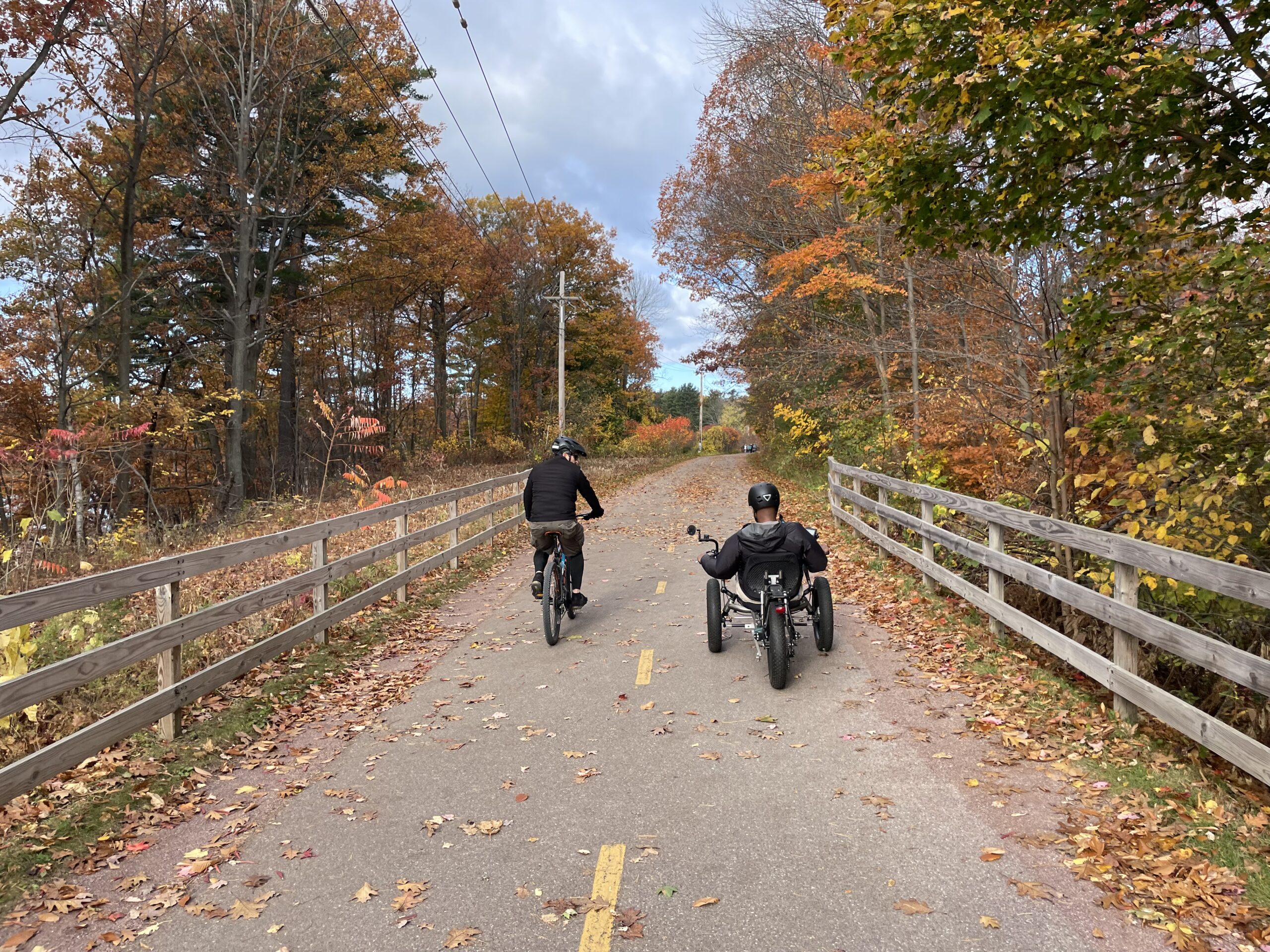
Photo: Louis Arevalorevalo

Access and accessibility are often used interchangeably, but they mean different things. Understanding the distinction is essential for building inclusive outdoor spaces.
Definitions
| Term | What It Means |
|---|---|
| Access | A space is usable by some segment of people. For example, adding signage in multiple languages improves access. |
| Accessibility/ Accessible | A space is usable by people with disabilities, including those with mobility devices, and generally free of barriers that prevent use. For example, adding braille signage improves accessibility. |
A project may improve access without improving accessibility, but increasing accessibility typically always increases access.
The space becomes more usable for people with disabilities and likely increases for other segments of the population as well.
Examples in Practice
| Example | Improves Access | Improves Accessibility |
|---|---|---|
| Trail signage in Spanish | ✅ | ❌ |
| Trail maps with braille or raised print | ✅ | ✅ |
| All-terrain wheelchair available for use | ✅ (for some) | ❌ (not everyone can use it) |
| Trail designed to ADA/FSTAG standards | ✅ | ✅ |
| Trail info posted online | ✅ | ❌ (not if the trail isn’t built to accessible standards) |
| Website with alt text and screen reader compatibility | ✅ | ✅ |
Communication Tips to Improve Access
Information
- Share trail details like surface, grade, width, rest areas, and potential barriers
- Include photos, videos, parking info, and GPS coordinates
- Group accessible trails together on your site
- Update info regularly (e.g., storm damage, closures, improvements)
Even if a trail isn’t fully accessible, providing clear info helps users decide if it meets their needs.
Language
- Use respectful, modern terms like accessible and non-accessible
- Avoid outdated or offensive terms like handicapped, crippled, physically impaired or differently abled
- Don’t quantify disabilities ex. mild or severe
- Avoid vague trail ratings like easy/moderate/hard — use measurable data instead
- Never label a trail “accessible” unless it meets ADA or Forest Service Trail Accessibility Guidelines.
Semantics matter. Language influences how people feel, how included they are, and how knowledgeable your organization appears.
Environment
- Communicate environmental details clearly on your site and signage
- Consider sensory and environmental factors like:
- Crowds during peak times or events
- Background noise from roads, sports fields, or gunfire
- Cell coverage for emergencies
Getting Started: Build With, Not For
Don’t build accessible trails for people with disabilities. Build them with the people who will use them.
Start here:
- Involve people with disabilities in audits, planning, fundraising, and decision-making
- Compensate people for their time, insight, and expertise
- Hire consultants with lived experience of disability and trail knowledge
- Do outreach with disability organizations from the start—not after design is done
- Build long-term relationships, not one-off consultations
Helpful Resource
“Nothing about us without us”
…isn’t just a saying—it’s a best practice.
Why It Matters
Nearly 29% of U.S. adults live with at least one disabling condition. Add in older adults, caregivers, and families with strollers — and nearly half the population benefits from improved trail access and accessibility.
These efforts aren’t just compliance. They’re about inclusion, dignity, and community.
🔗 Helpful resource: American Trails Access vs. Accessibility Webinar
Want Help Improving Your Trails?
The Trail Accessibility Hub can support you with tools, training, and feedback as you expand access and accessibility across your trail network.
Related Reading


How to conduct a trail audit
An accessibility audit is a practical, community-led way to document what outdoor recreation assets exist, what condition they’re in, and where improvements could be made.
FAQs
A: The Trail Accessibility Hub is a partnership of trail organizations and disabilities advocates dedicated to improving accessibility on public trails and outdoor recreation areas in Vermont for people with disabilities. The Hub was created in 2024 by Vermont Trails & Greenways Council in partnership with the Upper Valley Trails Alliance, Vermont Mountain Bike Association, Vermont Adaptive Ski and Sports, Northern Forest Canoe Trail and Trail Finder. VTGS hosts web–based resources that educate trail managers and support trail users. Together, the partnership hosts networking opportunities that connect partners and trail users to accessible trail design and maintenance information, trail grants and funding sources; provide trail assessments and more. Initially funded by the Vermont Outdoor Recreation Economic Collaborative (VOREC) Community Grant Program, the TAH is now seeking funding to continue in ‘26 and beyond.
A: Our Trail Accessibility Hub includes a helpful guide to finding wheelchair friendly trails and other types of outdoor recreation that are accessible to all persons. In this guide, you’ll find recommendations for accessible trail apps—like Trailfinder, Google’s ADA Map, and All Trails—as well as blogs and articles about disability friendly trails, accessible activities, and accessible travel resources in Vermont.
A: Trail Finder’s Accessible Experience Search is the easiest way to discover family-friendly outdoor activities that work for a wide range of ages and abilities. You can filter for pedestrian trails, biking routes, paddling access, walking paths, and nature centers that include accessibility details—such as surface type, slope, amenities, rest areas, parking, and restrooms. Many of the listings also note features that make outings easier for families, like stroller-friendly surfaces, short loop options, shade, picnic areas, and nearby playgrounds or educational programs.
A: Mobility equipment and other adaptive sports equipment—like aquatic equipment, all-terrain wheelchairs, adaptive paddling gear, adaptive mountain bikes, and more—can be purchased, rented, or borrowed through several adaptive sports organizations and programs in Vermont. Some of these organizations offer grants to help users purchase mobility equipment. Visit our helpful guide to learn more about the organizations offering these services.
A: Here in Vermont, several companies and organizations specialize in building accessible and adaptive trails. These experts can help make mountain bike trails more usable by people on adaptive equipment, improve aquatic access trails, suggest easy improvements to make pedestrian trails usable by people who may have visual impairments, or use walkers or canes, and ensure your trail project meets ADA accessible trail guidelines and standards. The full list is available on our Professional Trail Builders page.
A: Yes, there are private and public funding sources that can be used to improve trail accessibility. Two popular funding sources in Vermont include the FPR Recreation Trails Program (RTP), and the VOREC Community Grant Program. There is also federal funding for trails and recreational paths. Vermont Trails & Greenways Council continuously monitors available grants and funding sources to support your accessible trail project or other accessible outdoor recreation project. Available trail grants and other resources can be found here.
A: The short answer is, no. The two nationally recognized guidelines for defining trail accessibility are Access Board Guidelines (National guidance applying ADA/ABA principles to outdoor spaces) and the U.S. Forest Service Trail Accessibility Guidelines (FSTAG). Many trails can be greatly improved without being fully compliant with these guidelines. Small, low-cost improvements can still have a big impact. For example, improved parking and trail information at the trailhead, benches and resting spots, and removing tripping hazards can help parents with young children and people who use mobility devices like canes and walkers enjoy trail-based activities. You can learn more about guidelines for building accessible and adaptive trails here.
A: A sensory trail is a trail designed for people living with autism or a neurodivergence. Trails designed with these users in mind typically include sensory-friendly spaces or “alone zones,” predictable and consistent pathways, a video preview of the trail, interactive stations with tactile, auditory, or visual elements, and wayfinding support. Any and all of these features help reduce anxiety and provide an accessible nature experience for neurodivergent trail users.
A: The gold standard for accessible trails include: a minimum 36-inch width with 5-foot passing areas every 1,000 feet (preferably 5 feet throughout), slopes following U.S. Forest Service guidelines that allow up to 5% unlimited distance, 5 to8.33% for up to 200 feet between rest areas, and steeper grades up to 12% for shorter segments with mandatory rest stops. Trails should use hardened multi-layer surfaces like compacted hardpack with crushed stone base, feature accessible parking within 2% slope near the trailhead, include frequent benches with wheelchair space, and provide clear signage with trail information, safety barriers at viewpoints, and accessible restrooms connected by firm pathways. For more detailed information about ideal standards for trail accessibility, click here.
A: A good place to start is to talk with trail managers and disability advocates in your region to share your interest and learn about current projects. While it can be daunting to consider building a new trail, there is strong momentum in the state right now and a lot of helpful resources to get you started. You can find ideas for low-hanging fruit on the Trail Accessibility Hub web pages, attend networking events and workshops, and visit trails being built. Sign up for VTGC’s enews, and we’ll keep you updated. Still have questions? Feel free to contact us at info@ermonttgc.org.
