Trail Building Life Cycle
Your guide to creating high-quality, sustainable trails

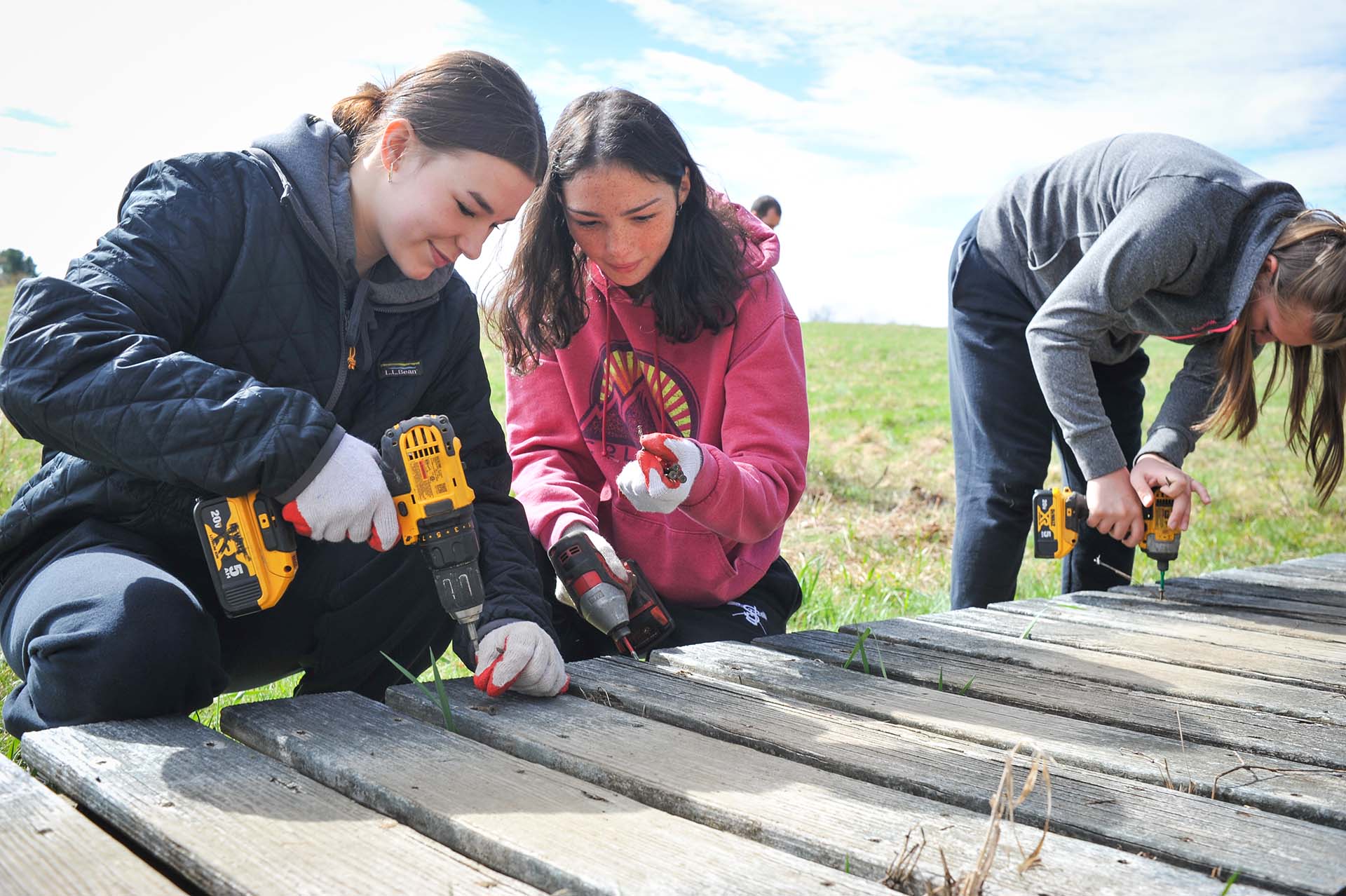
Trail building is both art and science. Deciding where to build, what to build, and who to build for is not as easy as identifying a possible location for a new trail, and then picking up a pair of loppers and a McLeod and getting to work. A well-built trail that withstands high-use and is climate-ready requires many phases summarized by the Professional Trail Builders Association (PTBA) as the ‘trail life cycle’. This page summarizes those steps.
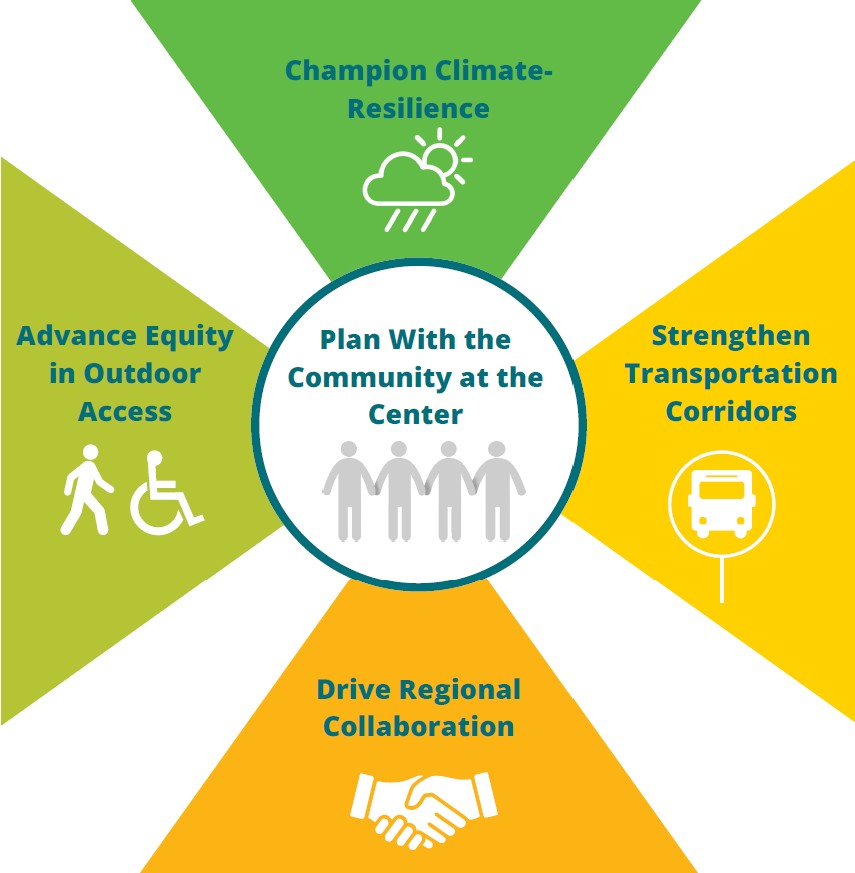
Ideal Approach
- Champion climate-resilience
- Advance equity in outdoor access
- Strengthen transportation corridors
- Drive regional collaboration
- Plan with the community at the center
Planning & Design

Conceptual Planning
Set the foundation
- Define why the trail is needed & who it serves.
- Engage community and landowners early.
- Minimize ecological impact.
- Check connections to existing trail networks.
- Identify needs: signage, parking, restrooms, stewardship, funding.
Field Planning
Validate the concept in the field
- Walk the corridor and collect field + spatial data.
- Identify terrain, drainage, access, and environmental constraints.
- Refine alignment for climate resilience & user experience.
- Ensure inclusive access for rural communities, older adults, youth, and people with disabilities.
Final Planning
Design a trail that lasts
- Produce detailed, sustainable design specs.
- Plan trailheads, wayfinding, amenities, and emergency access.
- Finalize permits, phasing, budgets, and long-term stewardship.
- Align everything with community goals and ecological protection.
Use the PTBA Trail Project Life Cycle to ensure trails are planned and built sustainably. The Trail Competency Framework can offer additional skills and competencies for stakeholder engagement.
Updates on the Vermont Trail System (VTS) – In 2025, FPR began working with a technical advisory committee(TAC) and consultant to modernize the VTS and develop a comprehensive set of up-to-date and universally-applicable VT-based best management practices (BMPs). The modernized VTS will help ensure all trail organizations have access to clear guidance and an understanding of what it means to belong to the VTS.
Stay tuned for VTS modernization in 2026: Sign up for our e-news to stay informed.
Funding Your Trail Project
Every successful trail begins with a solid funding plan. Project costs can include planning, design, construction, signage, amenities, and long-term maintenance—so identifying funding sources early is essential.
Explore Funding Opportunities
- Visit our Funding Page for grants, guidance, and statewide opportunities.
- The Vermont League of Cities and Towns maintains a comprehensive list of funding options for trails, paths, and sidewalks.
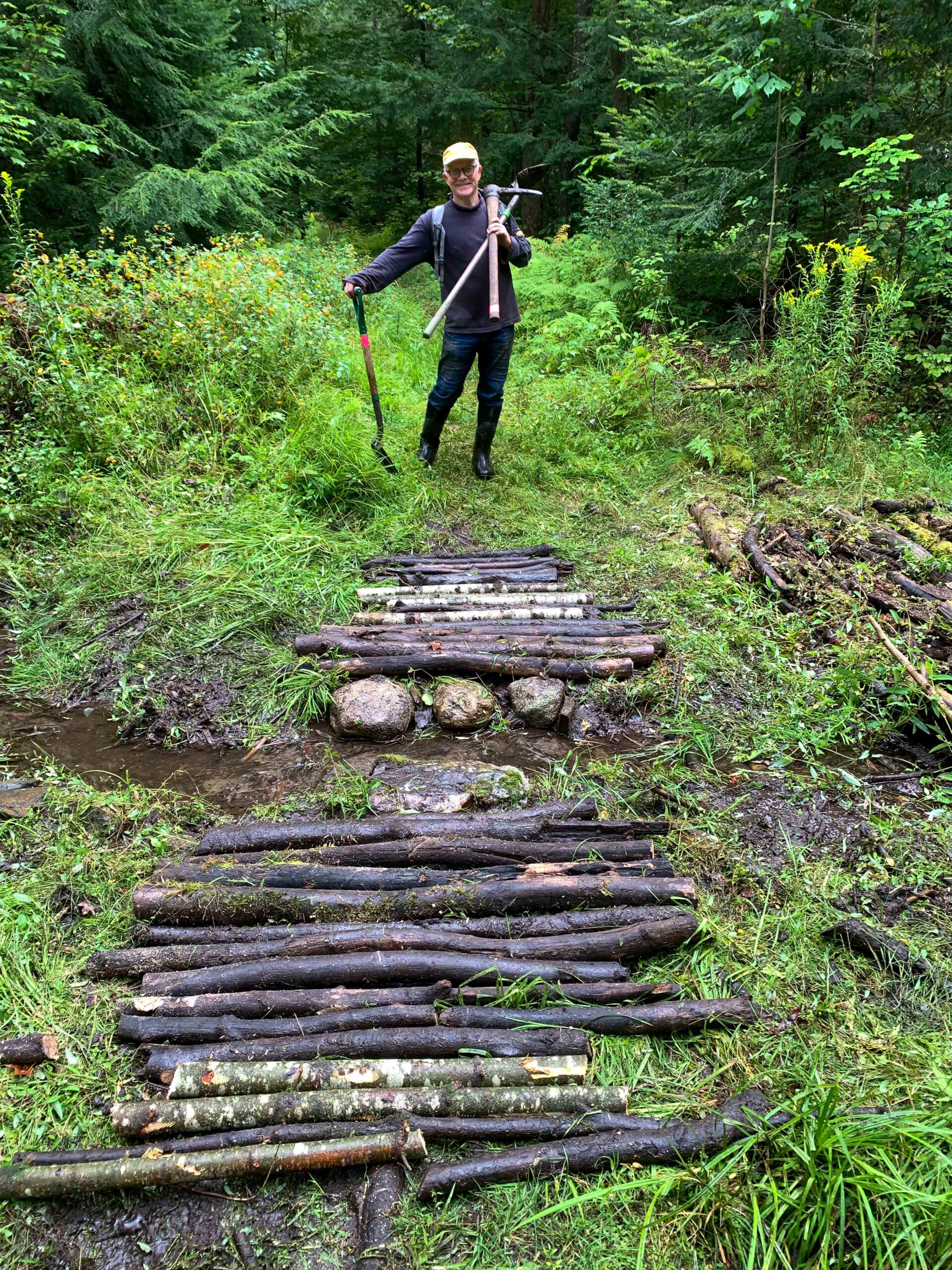
Ongoing Financial Support
Trails will always need both volunteer and financial support. Consider developing a membership program and a “Friends of” group to help with fundraising, volunteer recruitment, advocacy, and long-term stewardship.
- Example: The Friends of Tucker Mountain Town Forest supports trail building, community events, and conservation efforts.
Vermont Planning Tools
BioFinder is a statewide mapping tool that shows where Vermont’s most significant ecosystems, habitats, and species are found. Developed by the Agency of Natural Resources and partners, it supports conservation, stewardship, and smart land-use planning. It is free and easy to use.
The Vermont Natural Resources Atlas is an online mapping tool from ANR that lets users explore more than 150 layers of environmental data—such as wetlands, floodplains, rivers, and parcels—to support planning, permitting, and conservation decisions. It is free and easy to use.
The Vermont Conservation Plan is the statewide roadmap for conserving 30% of Vermont by 2030 and 50% by 2050, guiding land protection, working lands, and community resilience using science-based priorities. It is still in development. Stay up-to-date about progress and get involved by signing up for VTGC enews.
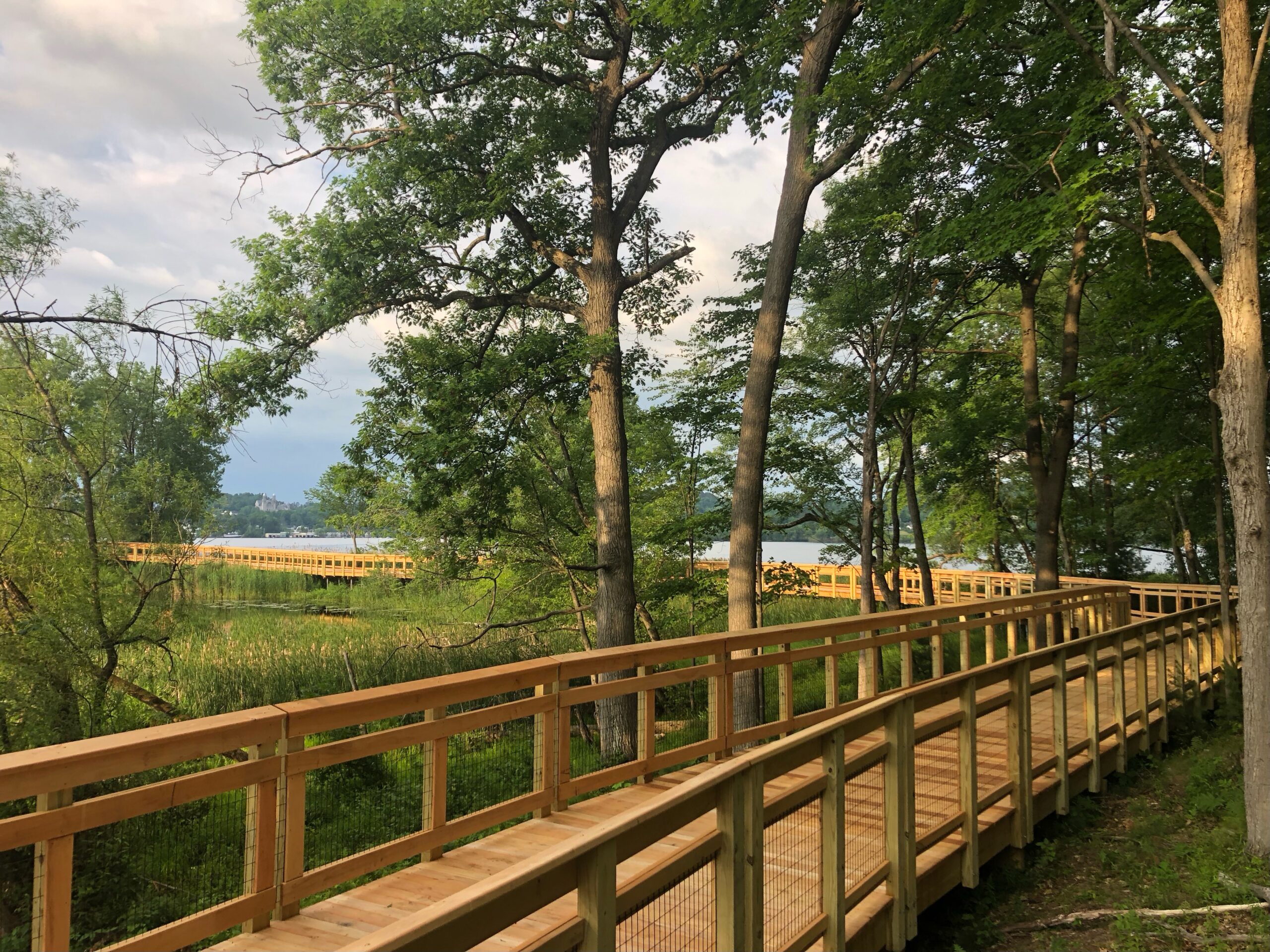
Design for Accessibility
Trails that are built with accessibility in mind ensure that people of all ages and abilities can enjoy Vermont’s outdoor spaces. Considering accessibility from the very start—during planning, design, and construction—creates trails that are more inclusive, sustainable, and welcoming to everyone.
Visit the Vermont Trail Accessibility Hub
A resource for understanding grades, surfacing, cross-slopes, features, and user needs for the planning for and building of accessible pedestrian trails, mountain biking routes, aquatic entry points.
Follow Best Practices
Below are trail design and management resources recommended by FPR and VTGC. Have questions or need help selecting the right guidance? Contact us anytime.
- USFS Trail Construction and Maintenance Notebook
- USFS Trail Fundamentals and Trail Management Objectives
- Vermont Town Forest Trail Design Guide
- Guidelines for Minimizing Recreational Impacts on Ecological Resources
- Guidance for Non-Native Invasive Plant Species Monitoring and Control in Connection (Section 248 Projects)
Mountain Biking
Rail Trails & Multi-Use Paths
Equestrian
Backcountry Skiing
Snowmobile
River Access
Rock Climbing
Campsites
Wetlands
Rivers
- VT DEC Recreation Trail Building & Riparian Areas — coming soon
Town Forest Recreation Planning Toolkit
Explore the Vermont Urban & Community Forestry Toolkit for guidance on engaging stakeholders, planning town-based trail systems, and more.
Find a Professional Trail Builder
Seek advice from non-profits that support trail managers (VTGC, Upper Valley Trail Alliance, Northwoods Stewardship Center, VYCC, etc.). Learn more here.
Permitting
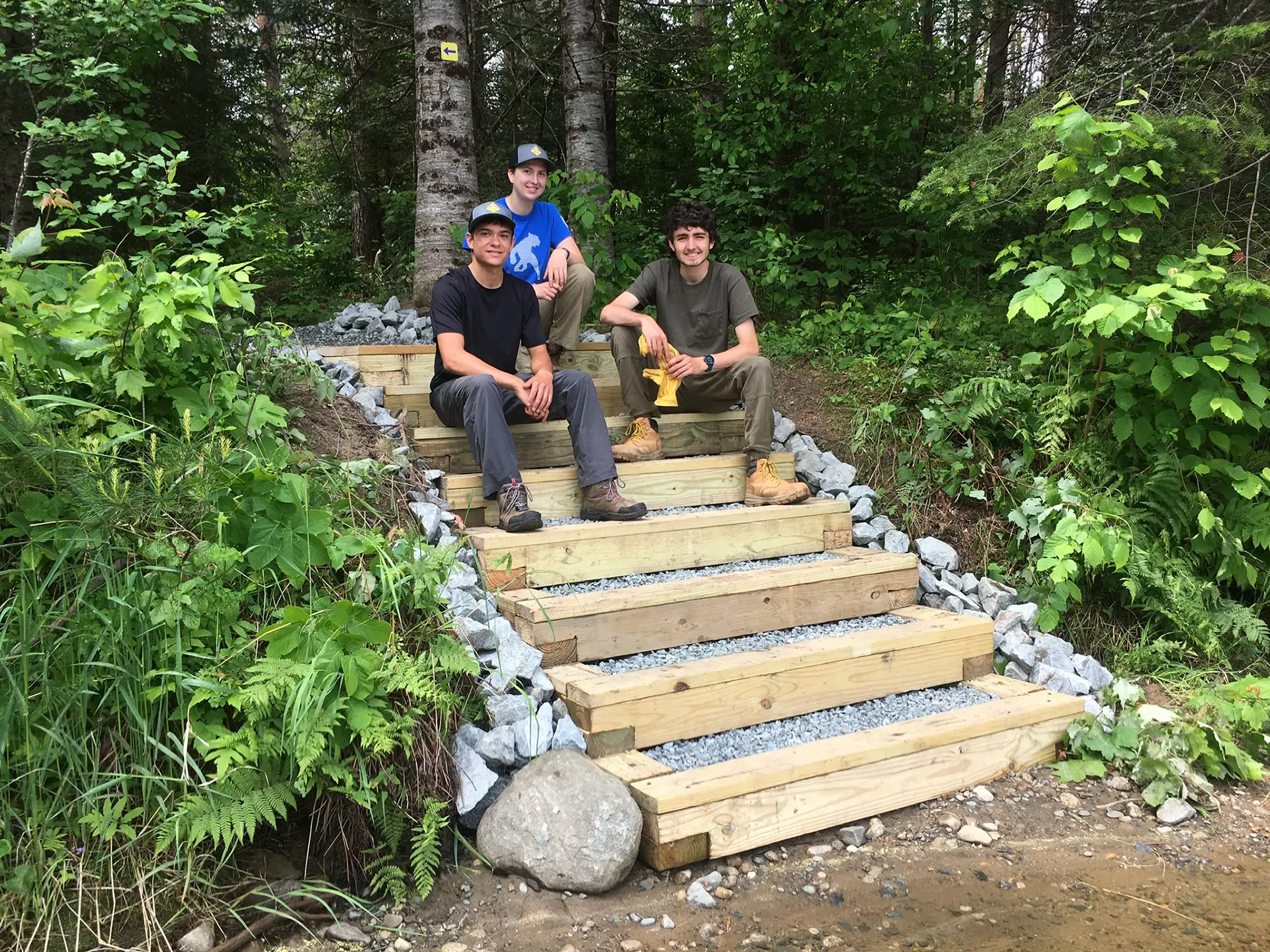
Permitting Essentials
Trail projects can require the same permits and approvals as other land-disturbance activities, and the level of review can increase with the project’s size and complexity. Figuring out what permits are needed and where to get them at which time in the process can be tricky. Go to our Permitting and Act 250 page for more information. There, you will find more specifics on the Permit Navigator tool, archaeological review, Act 250, wetland permits, and more.
Sign up for our enews for updates on Act 250 and other permitting and legal updates related to trails.
Construction
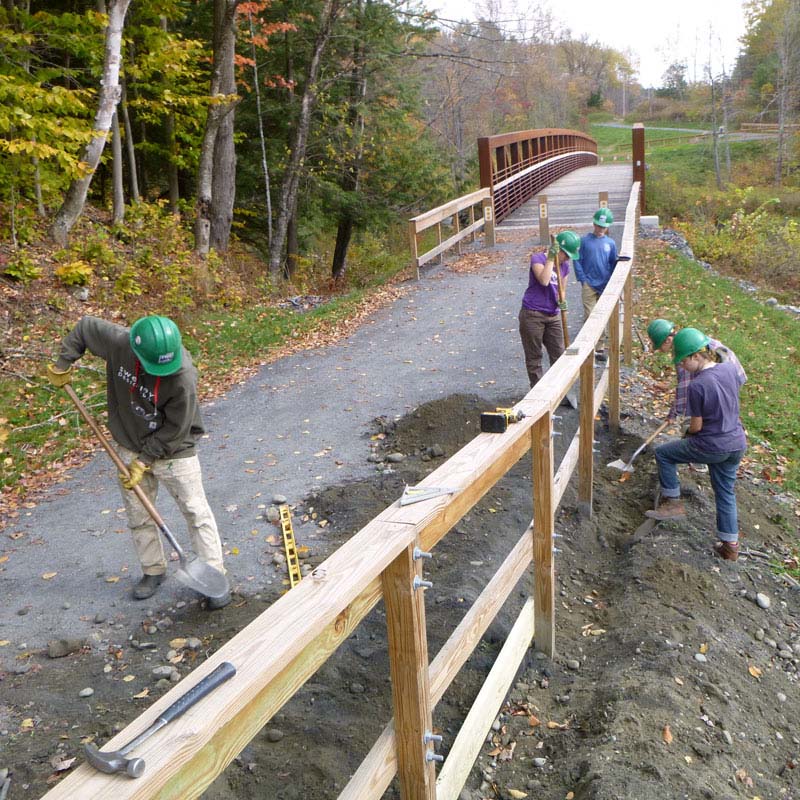
How Trails Are Built
- Trail construction can be built by volunteers or professionals, or a combination of the two. They might use hand tools or bring in machinery, depending on the trail’s purpose, terrain, and design features, project budget, and permitting requirements.
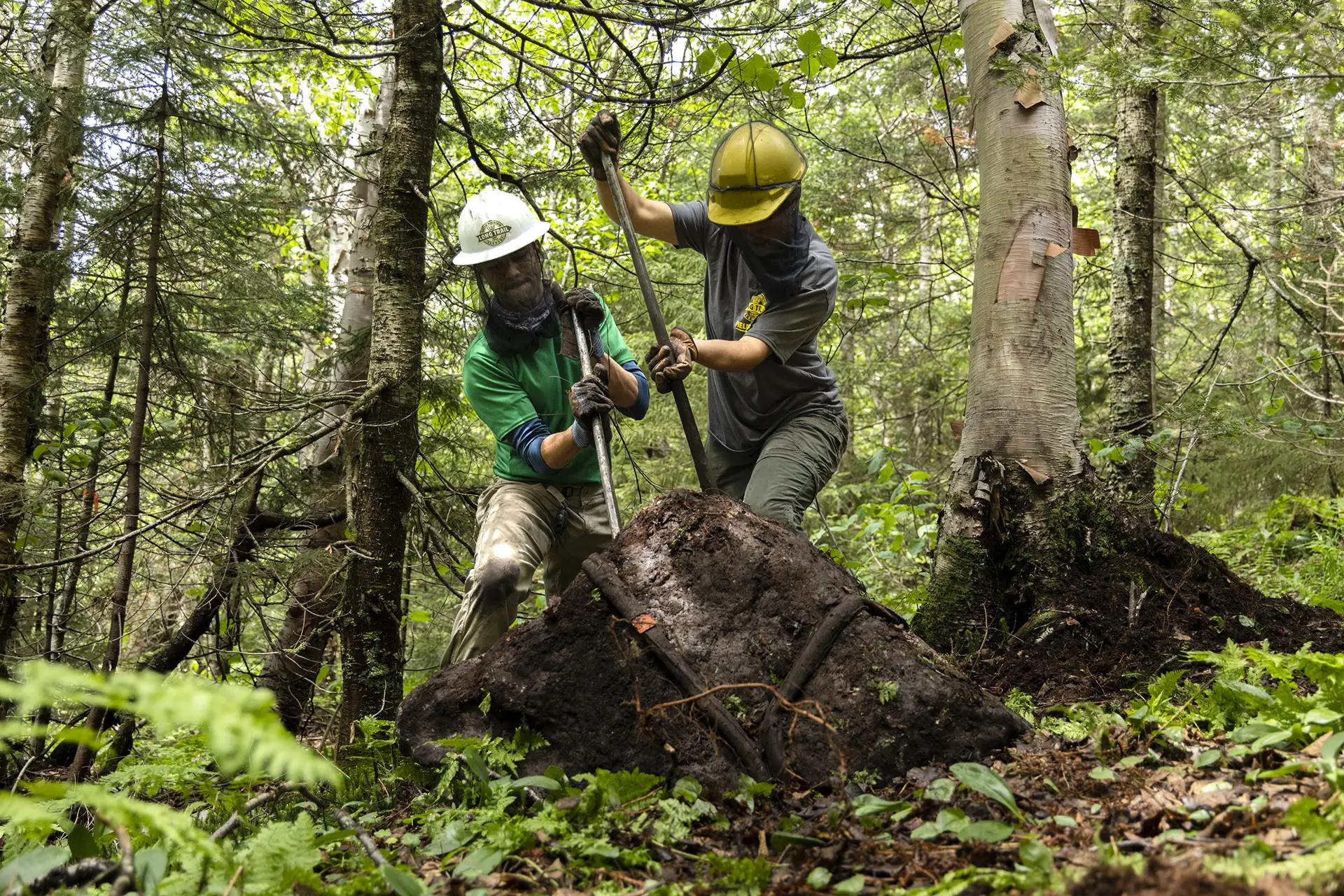
- Hand-tool crews use McLeods, mattocks, shovels, and more to clear vegetation, shape tread precisely and create a natural feel.
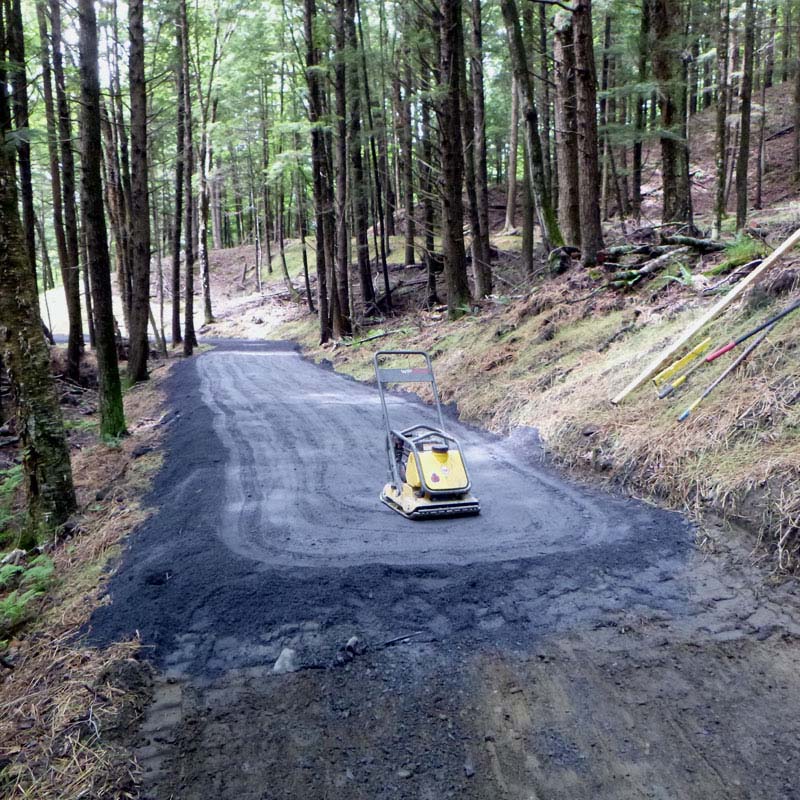
- Mechanized construction (mini-excavators, tracked dumpers, compactors, and dozers) is often used by professional crews to speed up work and build more efficiently, especially on longer or more complex trails.
- In many projects, a hybrid approach is used: machines do the rough excavation, and hand tools finish shaping, drainage, and fine detail.
- Regardless of method, safety is a top priority: crews are trained, wear protective gear, and follow a plan for hazardous terrain or tools.
More in-depth resources can be reviewed on our Professional Trail Builders page and the PTBA offers detailed descriptions on the methods of trail building construction.
Maintenance
Keeping Trails Safe, Sustainable, and Ready to Use
- Stewardship Plan First: Create a stewardship plan before construction begins. Define who’s responsible for continuing care, how often work happens, and what gets prioritized. Consider using volunteer trail stewards to track trail conditions, erosion, and user impacts.
- Routine Maintenance: Implement minimal but regular work every season (e.g., clearing water bars, pruning, surface repairs) so small problems don’t become costly. Create a record-keeping plan of schedule, and develop an annual calendar of activities.
- Predictable Infrastructure: Install dependable features like well-designed water bars, grade reversals, and drainage to manage routine wear and wet weather.
- Plan for Big Events: Include contingencies in your plan for major storms, fallen trees, and unexpected damage so the trail can recover quickly and safely.
- Volunteer Engagement & Celebration: Build a system for recruiting, training, and recognizing volunteers. Host work days, celebrate achievements, and give stewards a sense of ownership and impact.
Keep Learning

Trail work is always evolving, and staying informed helps your projects stay safe, sustainable, and aligned with best practices. VTGC provides ongoing opportunities for trail stewards, volunteers, and professionals to grow their knowledge and connect with others.
Stay Connected & Up to Date
- Sign up for our e-news to get updates, resources, and upcoming opportunities.
- Visit our News & Events page for workshops, webinars, trainings, and community gatherings.
- Join us at the annual Conference on Parks, Trails, and Recreation and VTGC’s Annual Meeting to meet other trail leaders and learn together.
Stay Connected & Up to Date
- Explore case studies, project spotlights, and hands-on training to see how other organizations have approached trail planning, construction, and stewardship.
- Access 200+ recorded webinars through American Trails on funding, accessibility, stewardship, equity, and more.
- Interested in becoming a professional trail builder? Take part in Vermont University’s Trail Building Certificate Program or Appalachian Mountain Club’s Trail Skills College.
Support the Trails Community
- Support VTGC so we can continue supporting you and the broader trails community.
